Readers often ask whether archaeology has proven the story of Moses in Egypt. The most honest answer is more complex: archaeology illuminates the world behind the story far better than it confirms a single individual by name.
What Archaeology Can Do
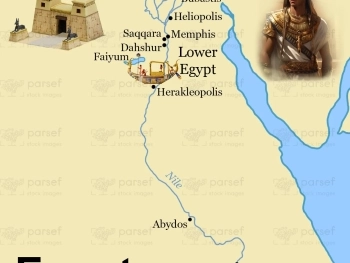
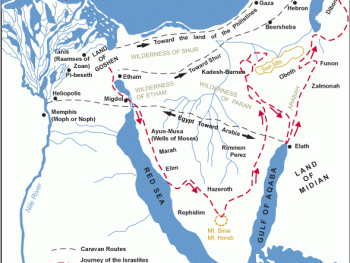
Archaeology can reconstruct the political, geographic, and economic environment of ancient Egypt and the eastern Delta. It can show that the biblical setting is plausible in broad historical terms, especially in relation to migration, labor systems, and frontier zones.
What It Cannot Do Easily
It is much harder to identify evidence for Moses specifically. Ancient archaeology rarely confirms individuals unless inscriptions or exceptional records survive, and the Exodus story belongs to a period and genre where direct confirmation remains elusive.
The Value of Contextual Evidence
Even without a named inscription for Moses, evidence about settlement in the Delta, Egyptian administration, and movement across frontier regions helps readers understand why the biblical story is set where it is. Context is not proof, but it is not nothing.
Download High Resolution 300 DPI File Moses in Egypt: Archaeological Evidence