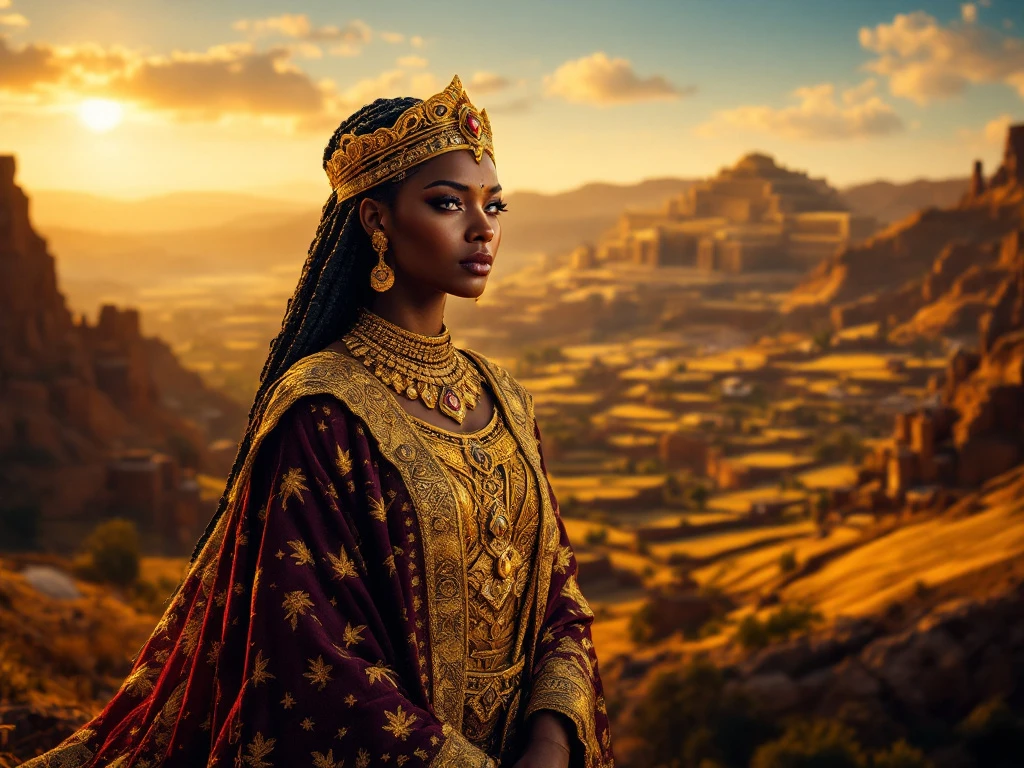
The Queen of Sheba enters the Bible briefly, but her afterlife in Ethiopian tradition is enormous. A short royal visit in scripture becomes, in later interpretation, one of the foundation stories of Ethiopian identity, kingship, and sacred history.
The Biblical Account
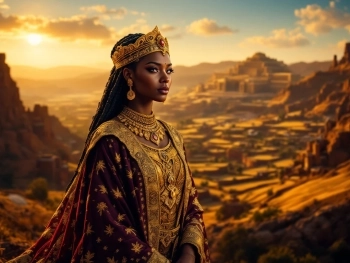
In the Bible, the Queen of Sheba visits Solomon to test his wisdom with hard questions and to witness the splendor of his court. The account is compact, but it establishes Sheba as wealthy, intelligent, and politically significant.
Why Ethiopia Claims the Story So Strongly
Ethiopian tradition extends the biblical account far beyond the original text. In later writings, especially in the Kebra Nagast tradition, the Queen of Sheba becomes the mother of Menelik I, the figure said to carry Solomonic lineage into Ethiopia.
A Story of Legitimacy
That tradition matters because it links Ethiopia not only to Solomon but also to the Ark of the Covenant and to a sacred royal line. In historical terms, the story becomes a narrative of legitimacy, not just a tale of curiosity and diplomacy.
Aksum and Living Tradition
For readers interested in travel and biblical geography, the Queen of Sheba story naturally connects to Aksum and Ethiopia's larger sacred landscape. Whether taken as history, tradition, or a mixture of both, it remains central to how many Ethiopians understand their place in biblical memory.
Download High Resolution 300 DPI File The Queen of Sheba: Ethiopia’s Biblical Legacy