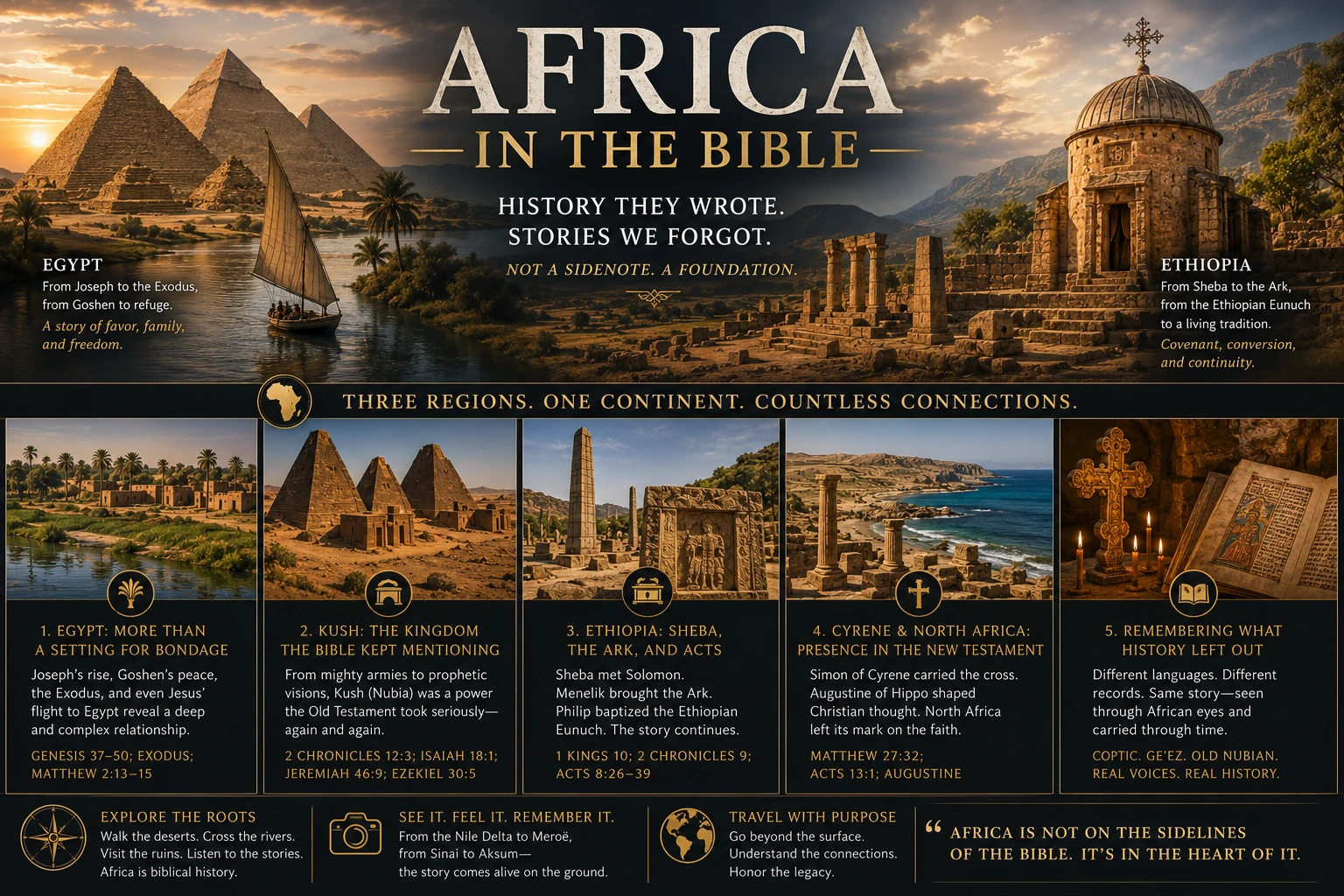
We've spent enough years tracing biblical geography across Egypt, Ethiopia, and Sudan to notice a persistent gap between how often Africa appears in scripture and how rarely that presence gets discussed outside specialist circles. This continent isn't a minor backdrop in the biblical text - it's woven into some of its most consequential stories, and much of that history has simply been forgotten by mainstream retellings.
Egypt: More Than a Setting for Bondage
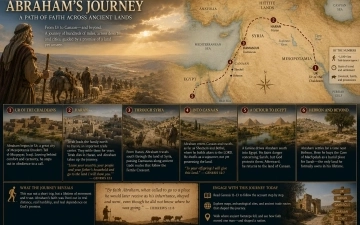
Most people know Egypt through the Exodus, but the biblical relationship with Egypt runs far deeper than a single story of slavery and departure. Joseph's rise to power within Pharaoh's court, the Israelites' extended settlement in the Land of Goshen, and even later biblical references to Egypt as a place of refuge, including the flight of Joseph and Mary with the infant Jesus, all point to a far more layered relationship between Egypt and the biblical narrative than the Exodus alone suggests.
Standing in the Nile Delta region historically associated with Goshen, it's easy to forget that generations of Israelite life unfolded here peacefully, long before the story shifts toward conflict and departure.
Kush: The Kingdom the Old Testament Kept Mentioning
Few biblical regions get overlooked as consistently as Kush, corresponding to ancient Nubia in what is now Sudan, despite being referenced dozens of times throughout the Old Testament as a significant and often militarily formidable kingdom. Prophetic books repeatedly single out Kush within broader visions of restoration and judgment, treating it as a serious regional power rather than a peripheral mention.
Walking among the pyramids of Meroe, less visited and steeper than Egypt's, we found ourselves wondering why a kingdom this frequently referenced in scripture remains so absent from popular biblical education.
Ethiopia: Sheba, Covenant, and Continuity
Ethiopia's biblical presence stretches from the Queen of Sheba's journey to Solomon's court through to the New Testament account of the Ethiopian eunuch's baptism in Acts, and Ethiopian tradition ties both moments directly into the country's own national and religious identity. The claimed presence of the Ark of the Covenant in Aksum, while impossible to verify independently, represents one of the most enduring living traditions connecting a modern African nation directly to Old Testament objects and narratives.
Cyrene and North Africa's New Testament Presence
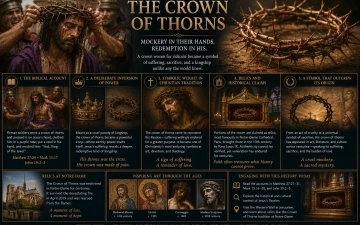
The New Testament briefly but meaningfully draws North Africa into its narrative through Simon of Cyrene, pulled from the crowd to carry Jesus's cross, a detail that reflects the significant Jewish and North African population of ancient Cyrenaica at the time. Later, figures like Augustine of Hippo, born in what is now Algeria, would go on to shape core Christian theology from distinctly North African soil.
Why These Stories Fade From Memory
Much of this forgetting comes down to which historical sources survived and which languages later dominated biblical scholarship - Greek and Latin texts from Europe were studied far more consistently than Coptic, Ge'ez, or Old Nubian sources documenting the same events from an African vantage point. Visiting the physical sites tied to these narratives, from Nubian ruins to Ethiopian churches, makes that imbalance obvious in a way reading alone rarely does.
Piecing the Narrative Back Together
Traveling between Egypt, Sudan, and Ethiopia gave us a far more complete sense of how central Africa actually was to biblical history than any single region could on its own. Rather than a handful of isolated references, what emerges is a continuous thread running through both the Old and New Testaments, one that deserves to be treated as central rather than incidental.
Exploring This History Today
Egypt offers the most accessible entry point for travelers interested in this thread, with well-developed sites tied to the Exodus narrative and early Christian history. Sudan and Ethiopia require more independent planning, but the relative quiet at sites like Meroe and Aksum offers a rare, uncrowded opportunity to engage with a chapter of biblical history that mainstream travel itineraries still largely overlook.