We arrived at Angkor Wat at 4:30 in the morning, cameras already set up on tripods in the dark, standing among a crowd of strangers all waiting for the same thing - that first sliver of light breaking behind the temple's iconic towers. It's one of the most photographed sunrises in the world, and even knowing exactly what to expect, watching it unfold in person still felt worth every lost hour of sleep.
Angkor Wat: The Icon Everyone Comes For
Angkor Wat itself is only one temple within a much larger archaeological park, though it's easily the most recognizable, its five towers modeled to represent Mount Meru, the sacred mountain of Hindu cosmology. We spent an entire morning working through its outer galleries, photographing the extensive bas-relief carvings that stretch for hundreds of meters, depicting scenes from Hindu epics carved with a level of detail that's easy to miss if you're moving too quickly.
By midday, the crowds around the main temple thicken considerably, so we used the early hours for photography and saved the more detailed, unhurried exploration for later in the afternoon.
Angkor Thom and the Faces of Bayon
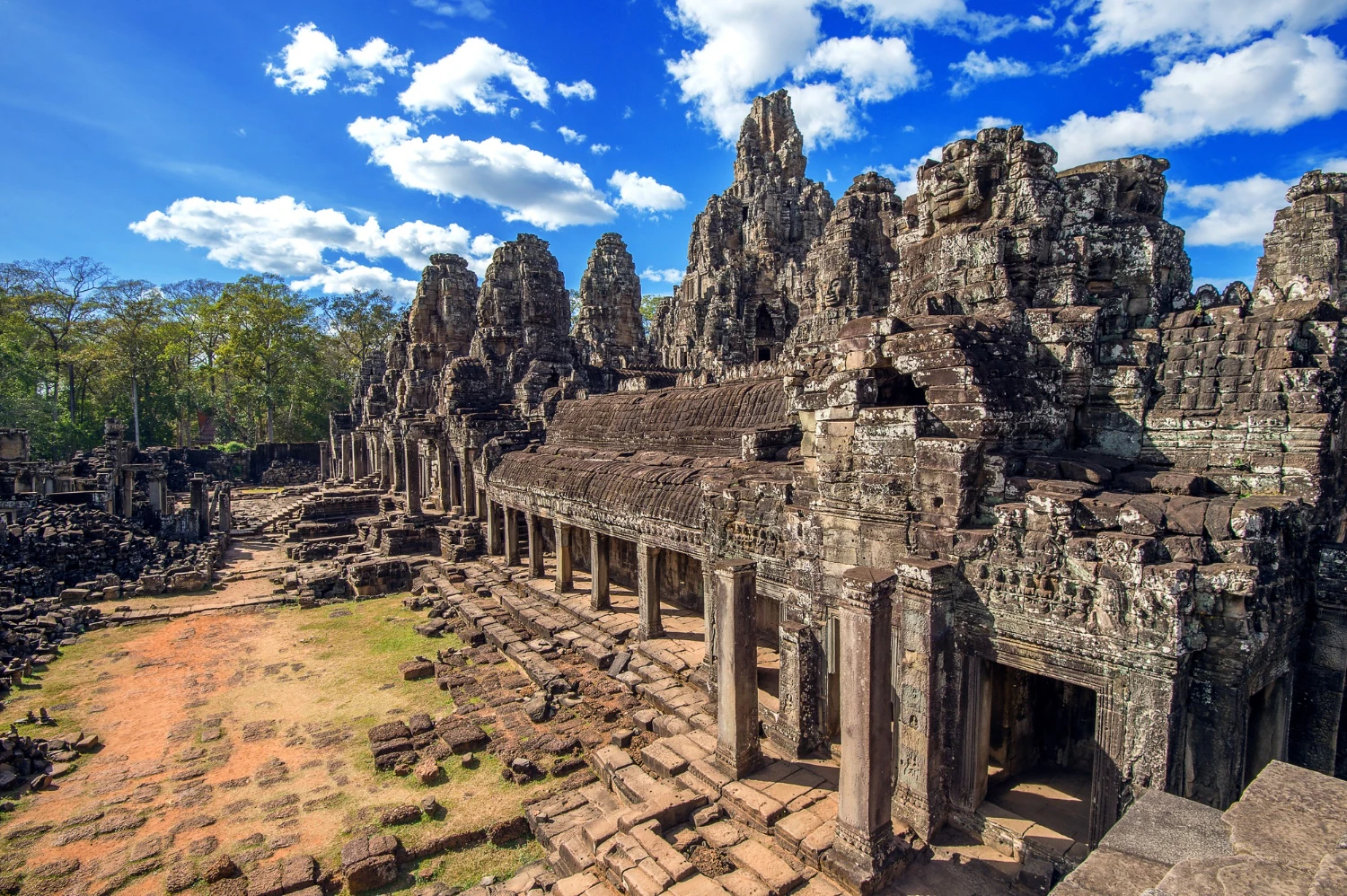
A short ride from Angkor Wat, the walled city of Angkor Thom holds the Bayon temple, famous for its dozens of massive stone faces carved into towers, each one gazing out in a different direction. Photographing Bayon at midday, with sunlight falling directly onto the carved faces, gave us some of the most striking close-up shots of the entire trip - the expressions shift subtly depending on the angle and light.
Ta Prohm: Where the Jungle Took Over
Ta Prohm is the temple most people recognize from films, left deliberately unrestored so that massive silk-cotton and strangler fig tree roots continue to grow directly through and over its stone structures. Walking through corridors where a doorway is half-consumed by tree roots the size of small buildings felt less like visiting a ruin and more like watching an ongoing negotiation between architecture and nature.
We went early in the day, since Ta Prohm's narrow, root-choked pathways get crowded fast once the tour buses arrive from Siem Reap.
Banteay Srei: The Pink Temple
A bit further from the main temple complex, Banteay Srei stood out for its distinctly different material - a pinkish sandstone that allowed for far more intricate, delicate carving than the grey stone used elsewhere at Angkor. Its smaller scale meant fewer crowds, and the level of detail in its carved lintels and pediments rewarded slow, careful photography rather than wide shots.
Beng Mealea: The Temple Fewer People See
For travelers willing to go a little further off the main circuit, Beng Mealea offered something increasingly rare at Angkor - a temple still largely unrestored, with collapsed galleries and toppled stone blocks left much as explorers first found them. Climbing over fallen sandstone to reach interior chambers, with almost no other visitors around, gave this stop a rawer, more adventurous feel than anywhere else on this trip.
Beyond Angkor: Siem Reap as a Base
Siem Reap itself, the town closest to the temple complex, has grown into a comfortable base for exploring the region, with enough infrastructure to make multi-day temple visits easy without feeling like a resort experience. We used it as a home base for four full days, which felt like the minimum needed to see the major sites without rushing through any of them.
Photographing at Scale
Angkor's temples present a genuine photographic challenge simply because of their size - wide-angle lenses help capture the scale of structures like Angkor Wat's outer galleries, while a longer lens becomes essential for isolating individual carvings and details at places like Banteay Srei. We found ourselves switching lenses constantly throughout each day, depending on which temple we were working through.
Planning Your Own Trip
The dry season, from November to March, offers the most comfortable temperatures and clearer skies for photography, though it's also the busiest period at the main temples. A multi-day Angkor pass gives far more flexibility to spread visits across early mornings and late afternoons, avoiding the harsh midday light and thickest crowds at the most popular sites.