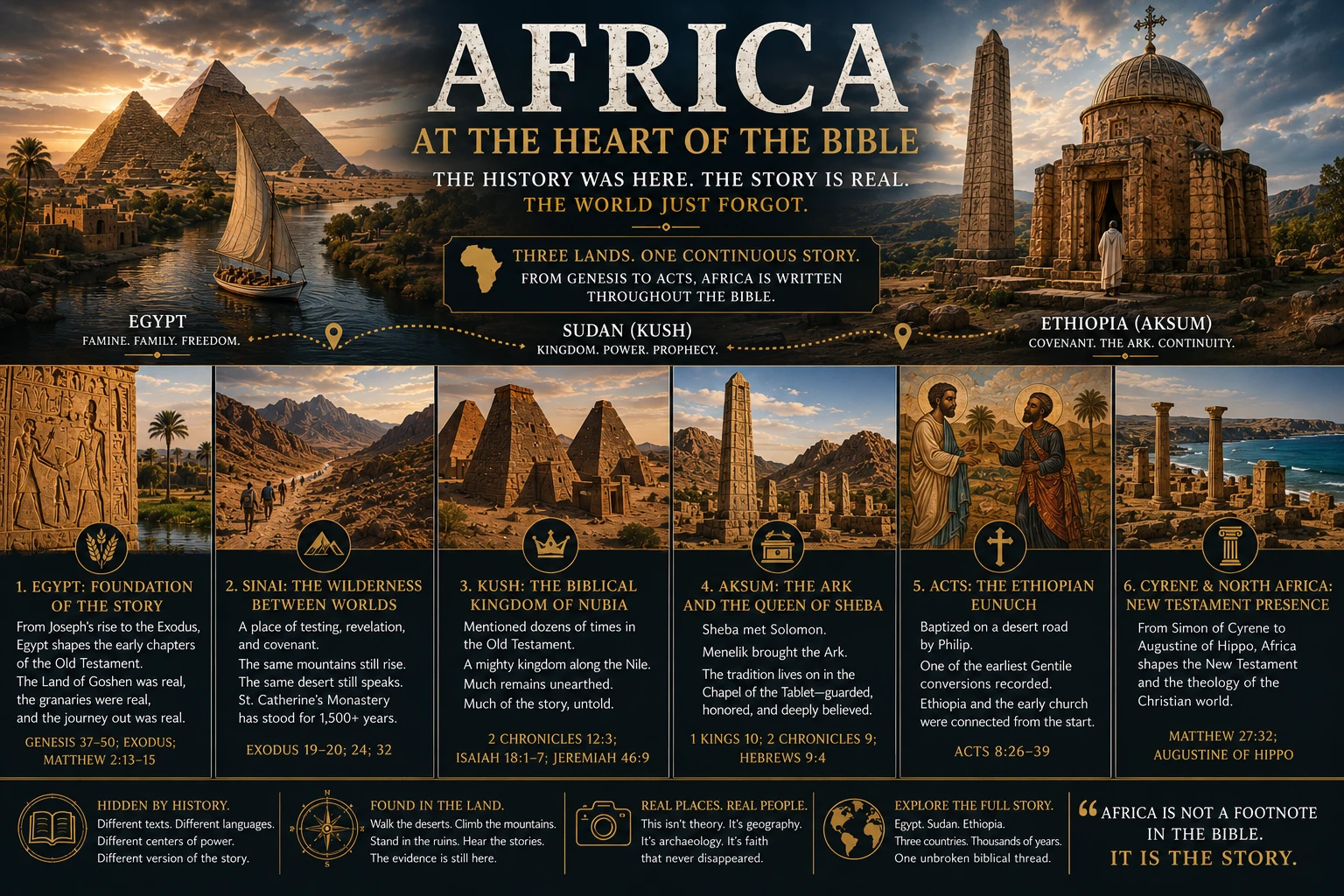
We keep returning to the same realization on every trip through Egypt, Sudan, and Ethiopia: the connections between this continent and biblical history aren't hidden because they're obscure - they're hidden because the mainstream version of this story was written somewhere else. The physical evidence is still here, often standing quietly, waiting for someone to actually look.
Egypt: A Foundation Layer of Biblical History
Egypt anchors more of the Old Testament's early narrative than most casual readers realize, from Joseph's administration of the country's grain stores during famine to the Israelites' extended settlement in the Land of Goshen before the Exodus. We've walked sites in the eastern Nile Delta historically tied to this settlement, and the sheer scale of ancient Egyptian infrastructure still visible there makes the biblical account feel less like legend and more like documented history with a geographic address.
The traditional Exodus route through the Sinai Peninsula toward Mount Sinai remains walkable in parts today, anchored by St. Catherine's Monastery, one of the oldest continuously active Christian monasteries anywhere in the world.
Kush: Sudan's Buried Biblical Kingdom
Nubia, corresponding to the biblical Kush, appears throughout the Old Testament as a significant kingdom, yet remains one of the least-discussed biblical regions in popular religious education. Standing among the pyramids of Meroe, steeper and more numerous than many travelers expect, we found ourselves surrounded by physical evidence of a civilization the biblical text treated as a serious power, not a footnote.
Large sections of Nubian archaeological sites remain unexcavated, meaning the full picture of this connection is still, quite literally, being uncovered.
Aksum and Ethiopia's Living Tradition
Ethiopia offers perhaps the most vivid example of a hidden biblical connection still actively lived out today, through the tradition that the Ark of the Covenant rests in Aksum's Chapel of the Tablet, guarded by a single monk according to centuries-old custom. This isn't a dormant legend confined to old texts - it's an active belief shaping Ethiopian Orthodox liturgy, architecture, and national identity in the present day.
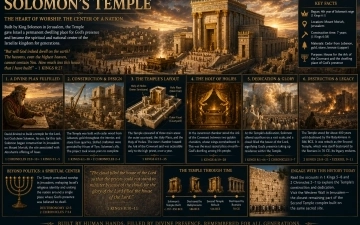
The Queen of Sheba's journey to Solomon's court, and her son Menelik's traditional return with the Ark, tie Ethiopia directly into the Old Testament narrative in a way few outside the country fully appreciate.
Cyrene and the New Testament's African Thread
North Africa's biblical presence extends into the New Testament through figures like Simon of Cyrene, drawn from the crowd to carry Jesus's cross, reflecting the substantial Jewish and North African population of ancient Cyrenaica. Later, Augustine of Hippo, born in what is now Algeria, would shape core Christian theological doctrine from distinctly North African ground, an influence still felt in churches worldwide today.
Why This History Stayed Hidden
The imbalance comes down largely to which sources survived and which languages dominated later biblical scholarship - Greek and Latin texts were preserved and studied far more consistently than Coptic, Ge'ez, or Old Nubian records documenting the same events from within Africa itself. Visiting these physical sites in person exposes that gap in a way that reading about it secondhand never quite manages to.
Piecing Together a Fuller Picture
Traveling between Egypt, Sudan, and Ethiopia, following this thread site by site, gave us a far richer sense of how central Africa was to biblical history than any single region or story could on its own. What emerges isn't a scattering of isolated references, but a continuous, physically traceable connection running through both Old and New Testament narratives.
Visiting This Hidden History Today
Egypt remains the most accessible starting point, with established sites and infrastructure tied to the Exodus and early Christian history. Sudan and Ethiopia require more independent planning and local guide coordination, but the quieter, less-visited nature of sites like Meroe and Aksum offers travelers a genuinely uncrowded way to engage with a history that's been hiding in plain sight all along.