The opening chapters of Genesis describe creation not as a single instantaneous event, but as an ordered, deliberate sequence unfolding across six distinct days, each building on the one before it. This first half of the account traces the initial three days, moving from formless emptiness into a world with structure, separation, and the first signs of life-supporting order.
Before the First Day
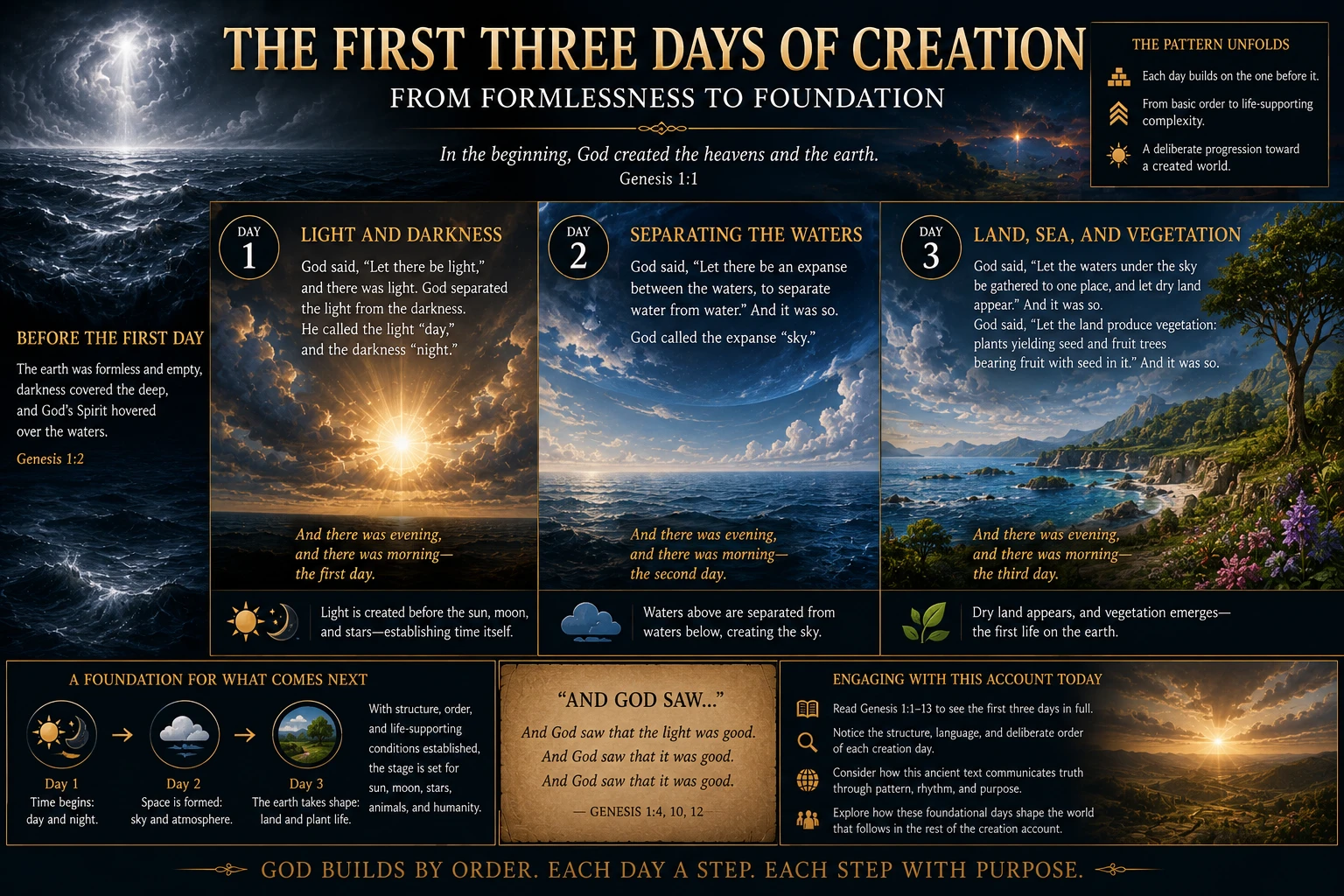
Genesis opens by describing the earth as formless and empty, with darkness covering a deep, undefined expanse of water, before any of the six days of creation formally begin. This initial state functions as the narrative's starting point of pure disorder, against which each subsequent day introduces a specific, deliberate act of organization and separation.
The text notes that God's spirit was already present, "hovering over the waters," establishing divine presence within the scene even before the first specific creative act takes place.
Day One: Light and Darkness
The first day's central act is the creation of light itself, followed immediately by a clear separation between light and darkness, described respectively as day and night. This initial division establishes the basic rhythm of time that will structure every subsequent day of the creation account, and by extension, structure human experience of time going forward.
Notably, this act of creating and naming light occurs before the sun, moon, and stars are introduced later in the sequence, a detail that has generated considerable discussion among readers trying to reconcile the text's internal ordering with modern astronomical understanding.
Day Two: Separating the Waters
The second day introduces a division within the waters themselves, creating what the text calls a "firmament" or expanse separating water above from water below, and naming this expanse "sky." This act establishes vertical structure within the created world, distinguishing the atmosphere and heavens from the waters that will, on the following day, be further divided to reveal dry land.
This day's work is notably the only one of the six not explicitly described as "good" within the text, a detail that has prompted extensive theological commentary regarding its possible significance, though most interpretations treat this as a stylistic rather than theologically loaded distinction.
Day Three: Land, Sea, and Vegetation
The third day accomplishes two distinct acts within a single day: the separation of dry land from the waters below, and the emergence of vegetation, including plants and trees capable of producing their own seeds. This marks the first appearance of life within the creation sequence, establishing a foundational ecosystem before any animal life is introduced in the days that follow.
The specific detail of plants "bearing seed according to their kinds" introduces a concept of ordered biological reproduction and diversity that recurs throughout the remainder of the creation account, particularly once animal life is introduced.
A Pattern of Increasing Complexity
Looking across these first three days together, a clear pattern emerges: each day builds directly on the structural foundation established by the ones before it, moving from basic separations of light and space toward increasingly complex and life-supporting conditions. Light and darkness create time; the sky separates atmospheric space; land and vegetation establish the physical stage on which animal life and, eventually, humanity will appear.
This structured progression has led many readers and scholars to view the creation account not merely as a list of isolated events, but as a deliberately composed narrative building methodically toward its eventual culmination.
Setting Up the Second Half
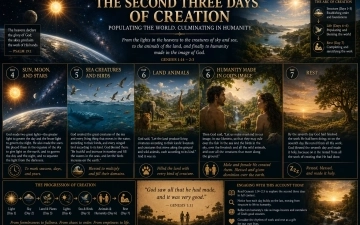
With light, sky, land, and vegetation established, the initial three days lay the essential groundwork for what follows: the introduction of celestial bodies, animal life, and ultimately humanity itself across the remaining three days of the account. The second half of this creation narrative shifts focus toward populating the structured world established during these first three days, a transition explored further in Part 2 of this series.
Engaging With This History Today
Readers interested in this account can find the full narrative in Genesis 1, with the first three days specifically covered in verses 1 through 13. Approaching the text's structure and pacing with attention to how each day builds on the last offers a richer understanding of the passage beyond a simple day-by-day summary.