Few objects in the New Testament carry as sharp a contrast between their original intent and their eventual meaning as the crown of thorns, a mocking gesture from Roman soldiers that Christian tradition would transform into one of the most sacred symbols associated with Jesus's suffering. Its story is brief in the biblical text, but its symbolic weight has grown steadily across two thousand years of theological reflection and artistic representation.
The Biblical Account
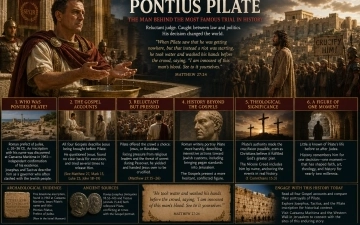
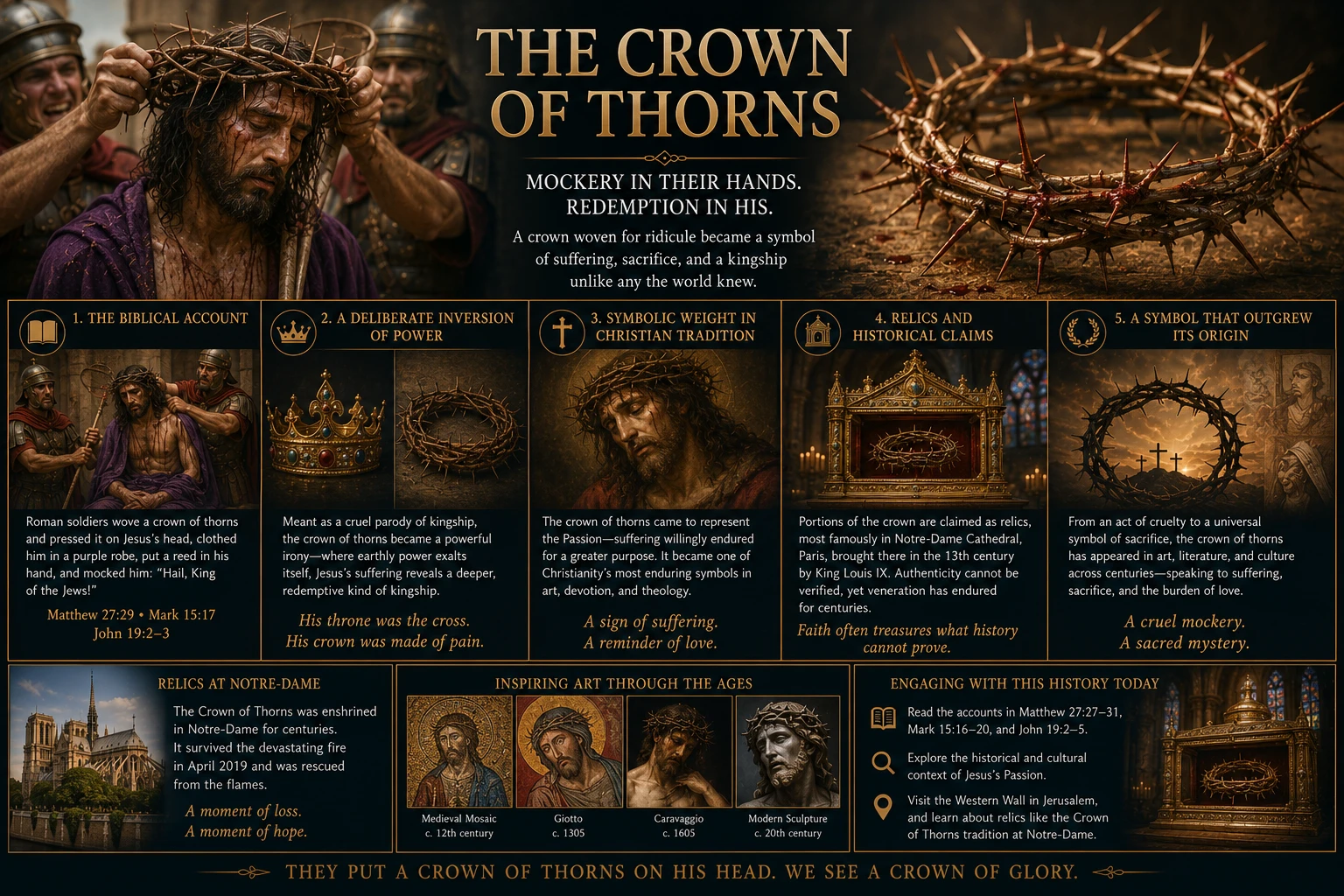
The crown of thorns appears in the Gospel accounts of Matthew, Mark, and John, describing Roman soldiers weaving together a crown from thorny branches and pressing it onto Jesus's head as part of a broader sequence of mockery following his trial before Pilate. The soldiers accompanied this act with a purple robe and a reed placed in his hand as a mock scepter, along with sarcastic declarations addressing him as "King of the Jews," turning the entire scene into a deliberate parody of royal coronation.
This mockery took place before the crucifixion itself, positioning the crown of thorns within a broader sequence of humiliation intended to publicly ridicule any claim to kingship the soldiers understood Jesus to be associated with.
A Deliberate Inversion of Power
What makes the crown of thorns theologically significant is the deliberate irony embedded in the original act - soldiers intending pure ridicule inadvertently created an image that Christian tradition would come to read as a genuine, if inverted, coronation. Where a traditional crown signals triumph, wealth, and authority, a crown made of thorns signals suffering, humiliation, and physical pain, and later theological reflection leaned directly into that contrast rather than around it.
This inversion became a recurring theme within Christian theology more broadly, framing Jesus's crucifixion itself as a paradoxical enthronement, with suffering functioning as the very mechanism of ultimate victory rather than its opposite.
Symbolic Weight in Christian Tradition
Over the centuries, the crown of thorns evolved from a specific historical detail within the Passion narrative into a broader symbol representing suffering endured for a greater purpose, frequently referenced in art, literature, and devotional practice well beyond its original biblical context. Its imagery appears extensively throughout Christian art history, from medieval manuscripts to Renaissance paintings, almost always emphasizing the tension between the crown's mocking origin and its sacrificial significance.
The crown also became closely associated with the broader concept of the Passion, the suffering Jesus endured leading up to and during the crucifixion, functioning as a visual shorthand for that entire sequence of events within religious art and iconography.
Relics and Historical Claims
Various relics claimed to be portions of the original crown of thorns have circulated throughout Christian history, most notably a relic housed for centuries in Paris's Notre-Dame Cathedral, brought to France in the thirteenth century under King Louis IX. The relic's authenticity, like most claimed relics from this period, cannot be independently verified through historical or scientific means, though it has remained an object of significant veneration regardless of that uncertainty.
The relic drew considerable public attention during the 2019 fire that damaged Notre-Dame, with its successful recovery from the burning cathedral treated as a moment of profound symbolic significance by many observers.
A Symbol That Outgrew Its Origin
What began as a specific act of cruelty within a single historical narrative has become one of Christianity's most widely recognized visual symbols, appearing far beyond strictly religious contexts in art, literature, and cultural references addressing themes of suffering, sacrifice, and unearned burden. This expansion reflects how thoroughly the crown of thorns has been absorbed into broader cultural symbolism, extending well past its original, narrow historical moment.
Engaging With This History Today
Readers interested in the biblical account can find the crown of thorns described specifically in Matthew, Mark, and John, each offering slightly different surrounding details worth comparing directly. Visiting collections holding claimed relics, such as those associated with Notre-Dame's tradition, offers a tangible if historically unverifiable connection to a symbol that has carried far more weight across Christian history than its brief biblical mention might initially suggest.