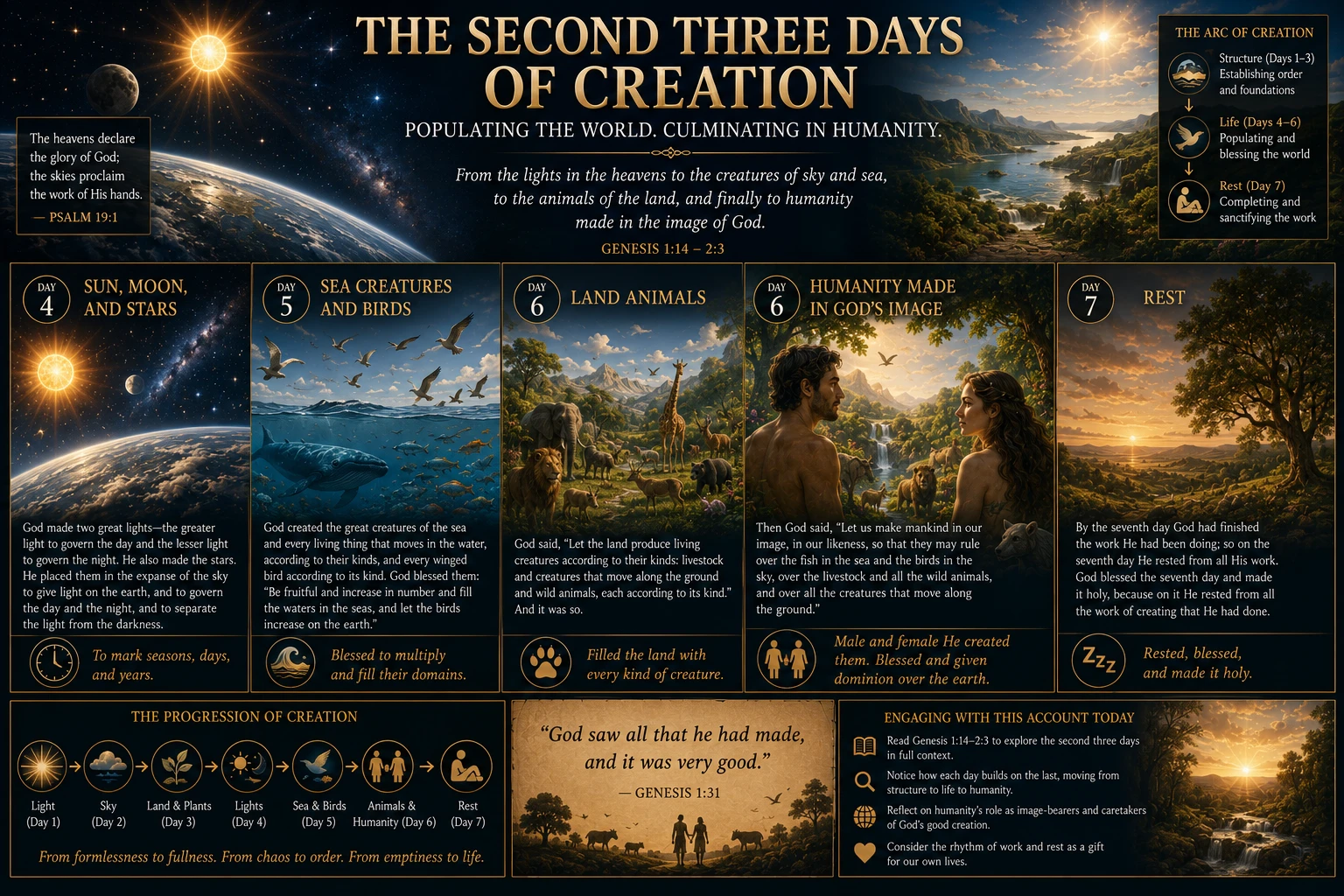
Picking up where Part 1 left off, the second half of the Genesis creation account moves from establishing structure and space into populating that structure with life, culminating in the creation of humanity itself. These final three days shift the narrative's focus from organizing the physical world to filling it with living creatures, and eventually with beings described as bearing a unique relationship to the divine.
Day Four: Sun, Moon, and Stars
The fourth day introduces the celestial bodies, described as being placed to govern day and night and to mark the passage of seasons, days, and years. This day's placement after light itself was already introduced on day one has generated significant discussion among readers, since it positions the sun and moon as functional markers of time rather than as the original source of light within the narrative's internal logic.
The text specifically emphasizes the sun and moon's role in regulating time and agricultural cycles, framing them primarily in terms of their practical function for the world being constructed rather than as objects of independent significance.
Day Five: Sea Creatures and Birds
The fifth day introduces the first animal life within the creation account, populating the waters with sea creatures and filling the sky with birds, described as being blessed and instructed to multiply and fill their respective domains. This marks a significant shift in the narrative's tone, moving from passive structural elements like light and land toward active, living creatures capable of movement and reproduction.
The specific language of blessing introduced on this day, absent from the earlier accounts of plant life, suggests a distinction the text draws between vegetation and animal life, treating the latter as bearing a different, more active status within the created order.
Day Six: Land Animals and Humanity
The sixth day accomplishes the most within a single day, introducing land animals in their various forms before culminating in the creation of humanity, described as being made "in the image of God." This phrase has generated centuries of theological reflection regarding what exactly it means for humanity to bear the divine image, with interpretations ranging from a focus on rational capacity to relational qualities to a broader sense of representative authority over creation.
The text describes humanity being given responsibility over the earth and its creatures, a detail that has shaped extensive theological and ethical discussion regarding the nature of human stewardship over the natural world.
Male and Female, Together
Genesis specifically notes that humanity was created "male and female," a detail emphasized within the text as integral to the image-bearing description rather than incidental to it. This detail has been central to extensive theological discussion regarding the nature of human relationship and complementarity as reflected within the creation narrative itself.
Day Seven: Rest
Although not one of the six days of active creative work, the seventh day holds significant weight within the broader narrative, describing God resting from the completed work and blessing this day of rest. This day establishes the theological and practical foundation for the Sabbath, a practice that becomes deeply embedded within later Old Testament law and Israelite religious identity.
The concept of rest following completed work introduces a rhythm extending beyond the creation account itself, establishing a pattern later applied directly to human life and religious practice throughout the rest of the Old Testament.
A Completed, Ordered World
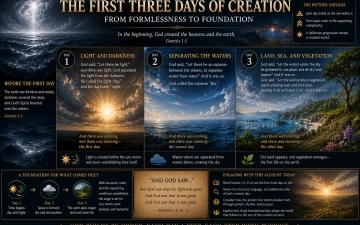
Taken together with the first three days covered in Part 1, the full six-day sequence presents creation as a deliberately structured progression, moving from formless emptiness through increasing complexity and culminating in humanity's unique role within a now fully populated and ordered world. The narrative's careful pacing and repeated structural patterns suggest an intentional, composed account rather than a simple chronological list.
Engaging With This History Today
Readers interested in the full account can find the second half of the creation narrative in Genesis 1:14 through 2:3, picking up directly from where Part 1's coverage ends. Reading both halves together offers the clearest sense of how the entire six-day structure builds progressively toward its culmination in humanity's creation and the sanctified rest that follows.