We'd both photographed wildlife before, but nothing prepared us for the sound of a lion roaring somewhere in the darkness just beyond our camp in the Maasai Mara - close enough that neither of us slept much that first night. By the time the sun came up over the savanna, we understood why this stretch of East Africa draws photographers back again and again.
The Maasai Mara: Kenya's Big Cat Country
The Maasai Mara is often described as one of the best places on Earth to photograph big cats, and within our first two days we'd found lions resting in the shade of an acacia tree, a leopard draped across a branch mid-morning, and a cheetah scanning the plains from a termite mound. Our guide, a Maasai tracker who'd worked the reserve for over a decade, seemed to read the landscape in a way that made every game drive feel less like luck and more like informed patience.
Golden hour here is genuinely golden - low light raking across the grass turns even a distant herd of zebra into a striking silhouette shot, and we found ourselves reworking our schedule around dawn and dusk drives almost entirely.
Crossing Into the Serengeti
A short flight from the Mara took us into Tanzania's Serengeti, technically a continuation of the same ecosystem but distinct enough in feel to justify visiting both. The plains here stretch further than the eye can really process, and photographing that scale meant leaning heavily on wide-angle shots to capture herds that seemed to have no visible end.
The Great Migration
We timed part of our trip around the wildebeest migration, one of the largest land mammal movements on the planet, following herds as they crossed between Kenya and Tanzania in search of fresh grazing. Watching a river crossing unfold - thousands of wildebeest hesitating at the water's edge while crocodiles waited below - was chaotic, tense, and one of the most difficult things either of us has tried to photograph well.
Timing the migration requires flexibility, since the exact crossing points shift year to year depending on rainfall, and we relied heavily on our guides' up-to-date knowledge rather than any fixed itinerary.
Ngorongoro Crater: A Natural Amphitheater
From the Serengeti, we drove to the Ngorongoro Crater, a collapsed volcanic caldera so densely packed with wildlife that it felt almost unfair compared to the wide-open search required elsewhere. Within a single morning drive along the crater floor, we photographed elephants, black rhinos, hyenas, and a lion pride all within a few kilometers of each other.
Photographing the Big Five
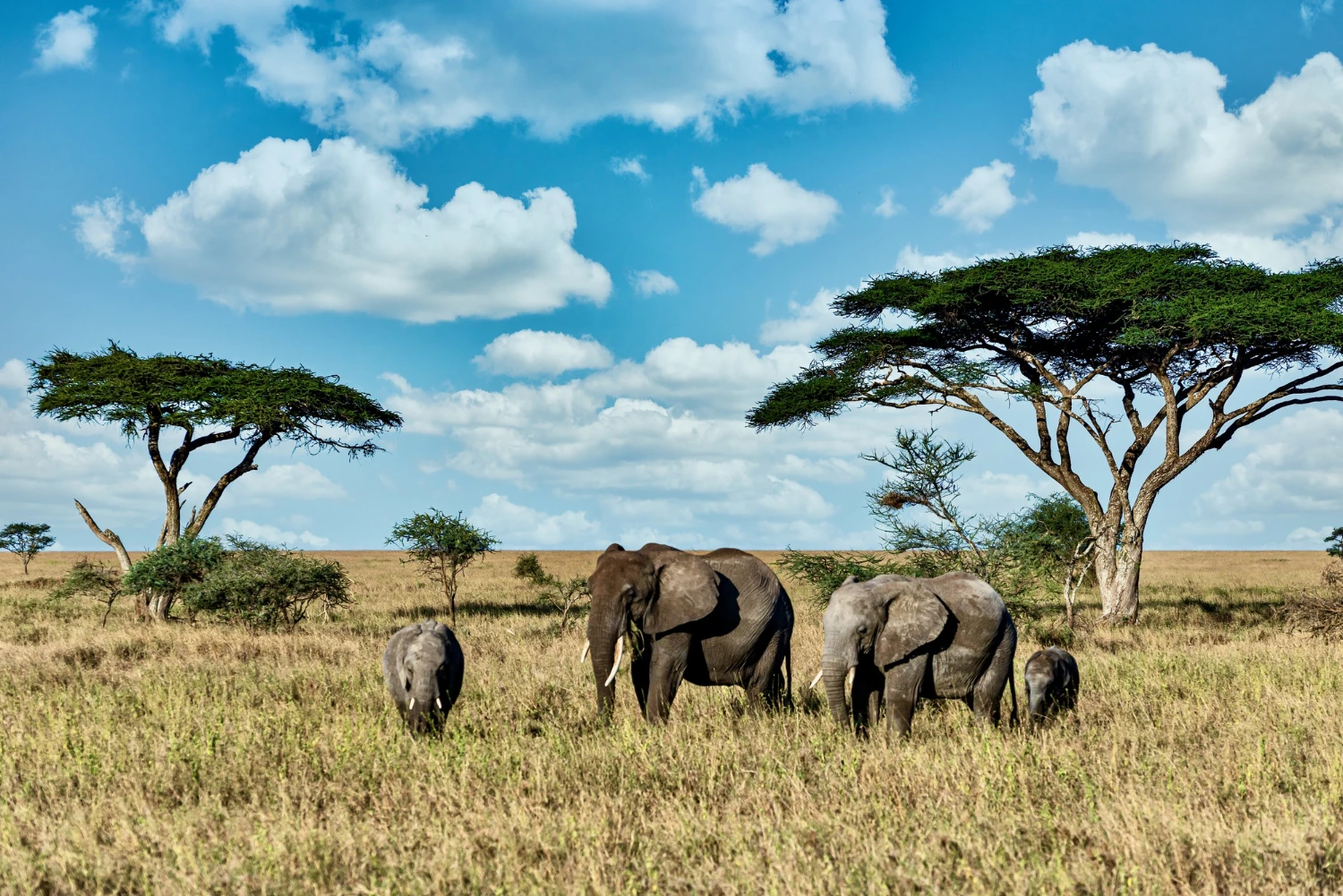
Between the Mara, Serengeti, and Ngorongoro, we managed to photograph all of Africa's Big Five - lion, leopard, elephant, buffalo, and rhino - though the leopard sighting took the most patience by far, a fleeting glimpse in low evening light that tested every setting on our cameras. Elephants, by contrast, were almost too easy, often walking close enough to a vehicle that a wide lens became more useful than a telephoto.
Working With Local Guides
None of the shots in this piece would have been possible without local trackers and guides, whose knowledge of animal behavior and terrain consistently outperformed anything we could have figured out alone. We made a point of supporting camps and operators employing local Maasai and Tanzanian staff, since responsible safari tourism depends heavily on that knowledge being valued and compensated properly.
Planning Your Own Trip
The dry season, from June to October, offers the clearest visibility and coincides with much of the Great Migration's river crossings, making it the most popular window for wildlife photography. Combining Kenya and Tanzania into a single trip is logistically straightforward thanks to short connecting flights between the Mara and the Serengeti, and we'd recommend at least a week across both parks to avoid rushing the experience.