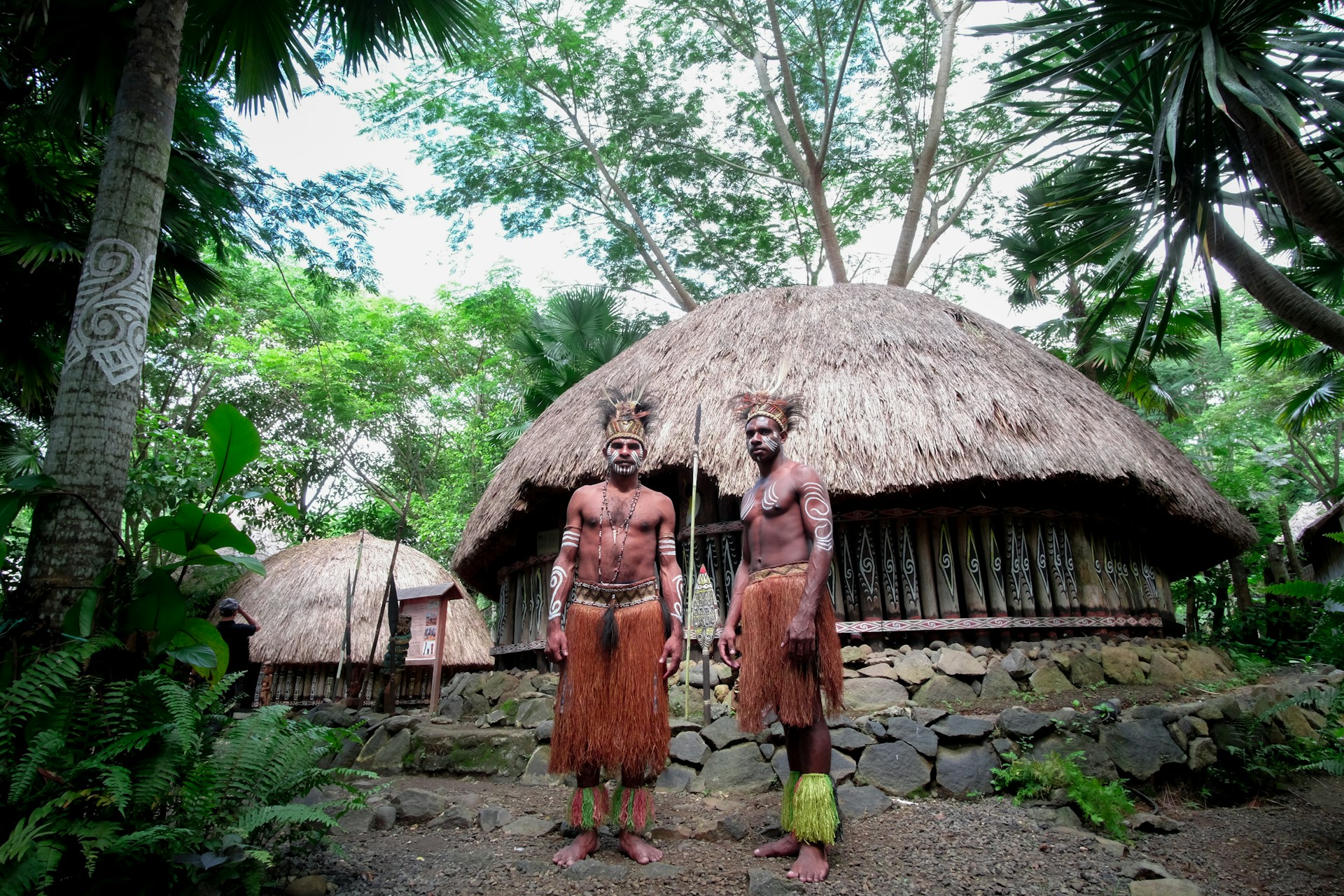
We landed in Wamena with our cameras half-charged and no real idea what to expect. Within an hour of leaving the airstrip, we were standing in a valley surrounded by highland ridgelines, watching smoke rise from a cluster of thatched huts we'd later learn belonged to the Dani people.
A Land Cut Off From Time
Papua's interior is one of the most isolated regions on earth - mountainous, forested, and until relatively recently, largely unreachable by outsiders. That isolation is exactly why so many tribal traditions here have survived largely intact, untouched by the homogenizing pull of modern trade routes and tourism circuits that reshaped so much of the rest of the world.
Getting there is part of the story. Small propeller planes replace roads for much of the journey, hopping between highland airstrips carved into jungle clearings.
The Dani of the Baliem Valley
The Dani people, who live around the Baliem Valley near Wamena, are probably the most visited of Papua's tribes - though "visited" here still means something very different than it does elsewhere. We spent our first days in a Dani village watching daily life unfold: pig herding, sweet potato cultivation on terraced hillsides, and elaborate feather and boar-tusk ornaments worn not for us, but for each other.
The Dani are known for the koteka, a gourd-based garment traditionally worn by men, and for elaborate ceremonial gatherings that mark important social and agricultural milestones. Photographing here felt less like documenting the exotic and more like being quietly let into someone's ordinary Tuesday.
The Asmat and Their Woodcarving Legacy
Further south, along the swampy river deltas near the Arafura Sea, live the Asmat - a people whose reputation for elaborate ancestor-worship woodcarving has made their art collected in museums worldwide. We traveled by dugout canoe through mangrove channels to reach a village where carvers were working on ceremonial poles taller than the houses themselves.
Asmat cosmology centers heavily on ancestor spirits, and their carvings aren't decorative in the Western sense - they're functional, spiritual objects meant to house and honor the dead. Standing in a village longhouse surrounded by these carvings was one of the most humbling moments of the entire trip.
The Korowai and Life Above the Canopy
Perhaps Papua's most famous - and most misunderstood - tribe is the Korowai, known historically for building houses on stilts high in the forest canopy. Much of what's written about the Korowai online leans into sensationalism, so we approached this leg of the trip carefully, working with local guides who had genuine, long-term relationships with Korowai families rather than staged "tribal tourism" setups.
What we found was a community adapting on its own terms - some households still living in traditional treehouses, others closer to rivers and trade paths, all navigating the same tension between tradition and the modern world that we'd seen throughout Papua.
Photographing With Respect
Every portrait in this piece came with a conversation first. We always asked before raising a camera, often through a local guide translating, and we tried to photograph people in their own context - working, resting, mid-conversation - rather than posed for an audience. That approach slows you down considerably, but it's the only way we felt comfortable working in communities where photography can easily tip into exploitation if you're not careful.
Planning Your Own Trip
Reaching Papua's tribal regions requires patience: flights into Wamena or Jayapura, followed by smaller charter flights or river travel to reach more remote communities. Hiring a local guide isn't optional here - it's the difference between a respectful visit and an intrusive one, and it's usually the only realistic way to arrange access at all. Best months to travel are during the dry season, when muddy highland trails and swollen rivers are far more manageable.