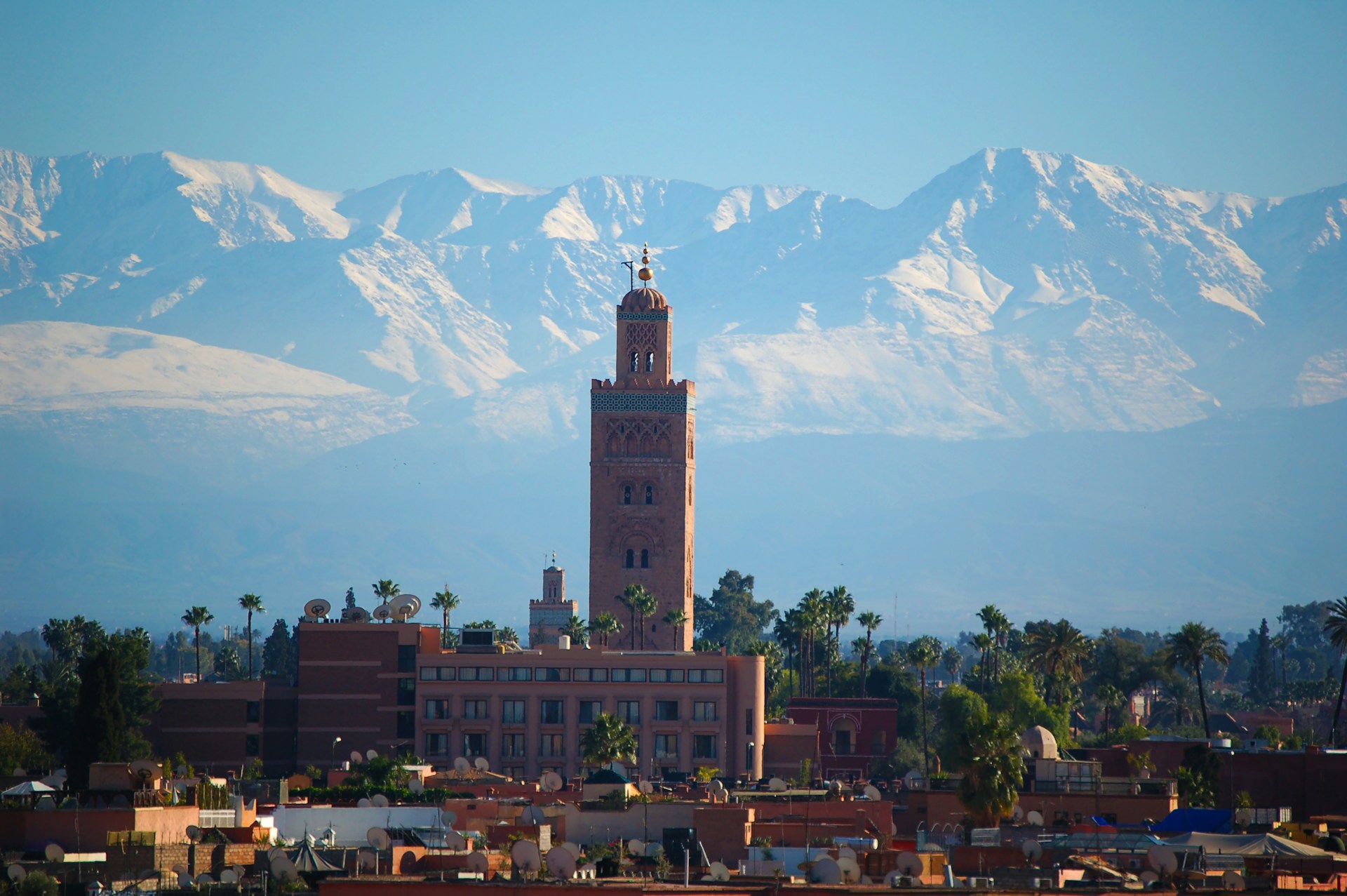
We arrived in Marrakech expecting chaos and got something closer to choreography - a city that moves fast but somehow never quite loses its rhythm. Within ten minutes of stepping into the Medina, we'd already put our cameras away twice, not because there was nothing to shoot, but because there was simply too much happening at once.
Marrakech: A City Built for the Senses
The Jemaa el-Fnaa square is where most first impressions of Marrakech get formed, and ours were no exception - snake charmers, spice vendors, and the smell of grilled meat drifting over a crowd that thickens as the sun goes down. We found the real photographic gold, though, tucked into the narrower alleys of the souks, where dyed wool hangs in doorways and light falls through gaps in the rooftops in sharp, dramatic shafts.
Staying in a traditional riad rather than a hotel changed the whole rhythm of our visit. These converted courtyard houses, often centuries old, offer a quiet interior world just steps away from the Medina's noise - a contrast we leaned on heavily for photography, alternating loud market scenes with the stillness of tiled fountains and shaded courtyards.
The Colors of the Majorelle Garden
A short taxi ride from the old city, the Majorelle Garden offers a completely different visual register - the electric cobalt blue of its walls, set against cacti and palm groves, was one of the most photographed corners of our entire trip. It's a popular stop, so we went early, before the light turned harsh and before the crowds arrived in full force.
Beyond the City: The Atlas Mountains
We rented a driver for a day trip into the High Atlas Mountains, and the landscape shift was immediate - red-clay Berber villages clinging to hillsides, terraced farmland, and switchback roads that gave us some of the best wide shots of the whole journey. Stopping in a small village for mint tea with a local family gave us a version of Morocco that felt worlds away from the Marrakech souks, quieter and slower, but no less rich.
Into the Sahara
No trip through Morocco felt complete without pushing further east, toward the dunes near Merzouga. We joined a small camel trek at sunset, watching the light turn the sand from gold to deep orange to almost purple as the temperature dropped fast. Spending a night in a desert camp under a genuinely dark sky, far from any city light, was one of those experiences that photographs poorly compared to how it actually feels - but we tried anyway.
Practical Notes From the Road
Morocco rewards slow travel far more than a rushed itinerary; we found that spending at least two full days in Marrakech before heading out gave us time to actually understand the city rather than just pass through it. Spring and autumn offer the most comfortable temperatures for both the Medina and the desert legs of the trip, avoiding the brutal midday heat of summer.
Hiring a local driver-guide for the mountain and desert routes turned out to be worth every dirham - not just for navigation, but for the informal introductions to villages and families we never would have found on our own.